
The Ice Slurry Project
Improving tilapia welfare and product quality at slaughter in the Philippines. Launched in May 2026, after a year of ground research in Luzon and beyond.
Why focus on slaughter?
Significant quality effects are decided in the final hours before slaughter. A faster, less stressful death preserves firmness and colour and extends shelf life — so better welfare directly means a better product. And compared with changing feed or water systems, improving slaughter is highly cost-effective. This makes it currently our best option for working on the intersection we care about: better welfare, better quality.
The problem today
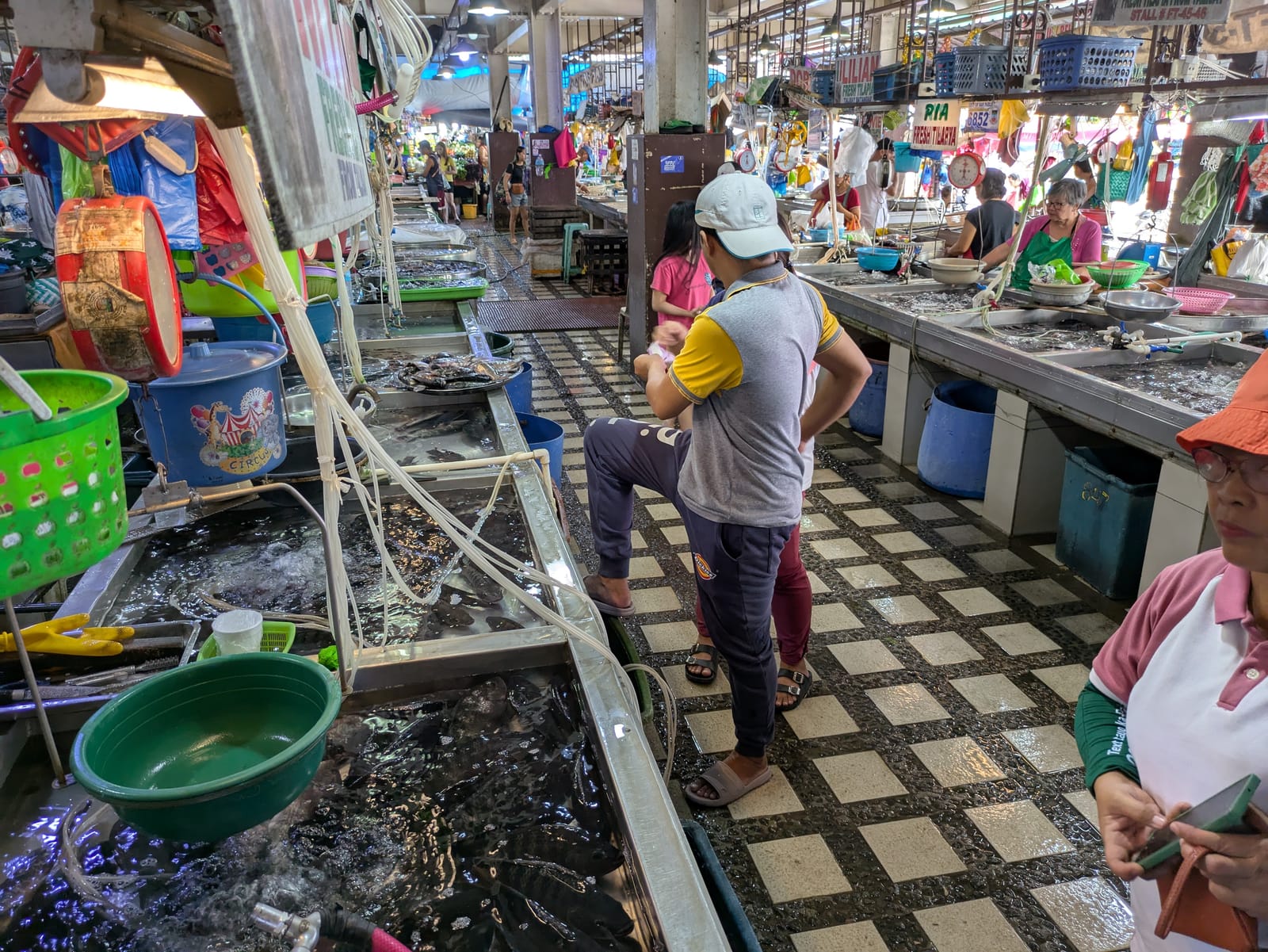
In the field we observed tilapia being transported alive, then held and slaughtered at the market. Along the way, quality is lost before the fish ever reaches the buyer:
- Rough handling during harvest causes bruising and physical damage, reducing fillet yield and increasing rejection rates.
- Live transport exhausts fish, depleting the energy reserves that determine flesh firmness and shelf life.
- Prolonged holding and slow slaughter at the point of sale trigger a stress response that further worsens product quality.
Our method
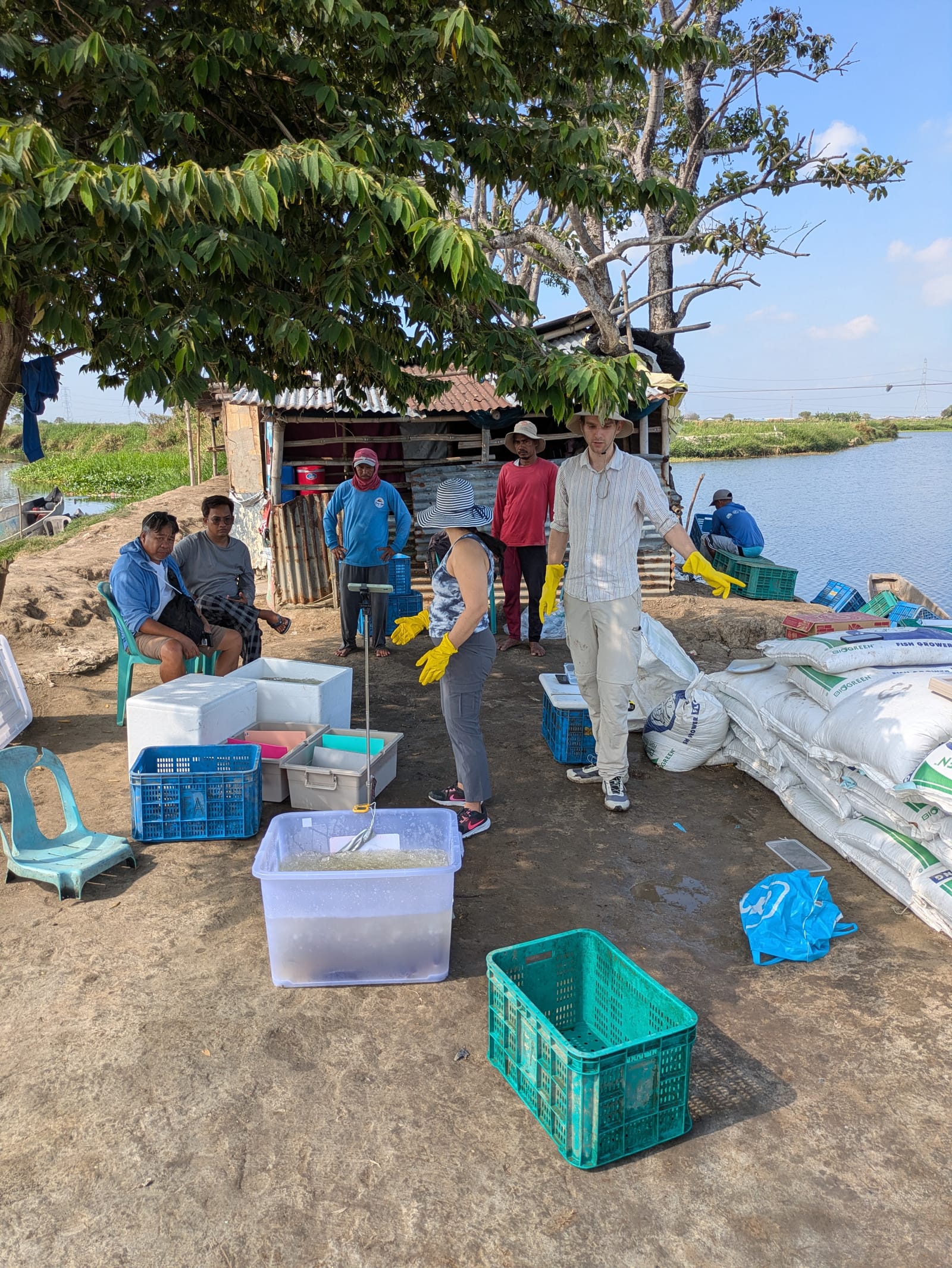
Live fish are immersed in a slurry of crushed ice and water immediately after harvest — chilling the fish while it is alive, not icing it after it is dead. The abrupt temperature change means the fish dies within minutes, faster and with less stress than the current practice. It is practical for farmers: it uses ice already available in the market and needs no new equipment.
We are open about where this sits on the ladder: electrical stunning preserves welfare and quality best, but ice slurry is a clear improvement on today's common practices — and it is the most practical step available to producers now. Ice slurry is also usually required as part of an electrical stunning setup, so adopting it today brings the industry a step closer to the best method in the long term.
Something in it for everyone
- The fish experience less suffering during the final stages of their life — a faster, less stressful death instead of prolonged transport, holding and slow slaughter.
- Consumers get a better-tasting, longer-lasting product — fast chilling slows spoilage from the moment of death, not hours later.
- Farmers and transporters see a reduction in mortality during transport, and don't have to invest in expensive live-transport equipment.
- The industry professionalises in a direction other countries have already taken — building cold chains that minimise food waste and make the supply chain more efficient, opening the door to premium retail and export markets.
Where we are
The programme launched in May 2026. We have run field trials in Pampanga with documented results, working with partners including Fresh Options and the St. Isidore Farmer Training Center, and developed a clear, repeatable slaughter protocol. We are now planning an on-the-ground study to measure the quality gains with real harvest data — firmness, shelf life and taste — and are looking for universities or private research institutions experienced in product-quality research to partner with.
Download the protocol (PDF)Get involved
Our support is cost-free — practical advice for setting up ice slurry slaughter, commissioned studies, consumer and market research, and connections to buyers who value quality. We'd love to connect with traders and consignación buyers, processors, cold-chain and logistics companies, retailers, institutional buyers, and researchers. Get in touch.